Own SaaS · Generative AI · Hospitality
GastroVision AI
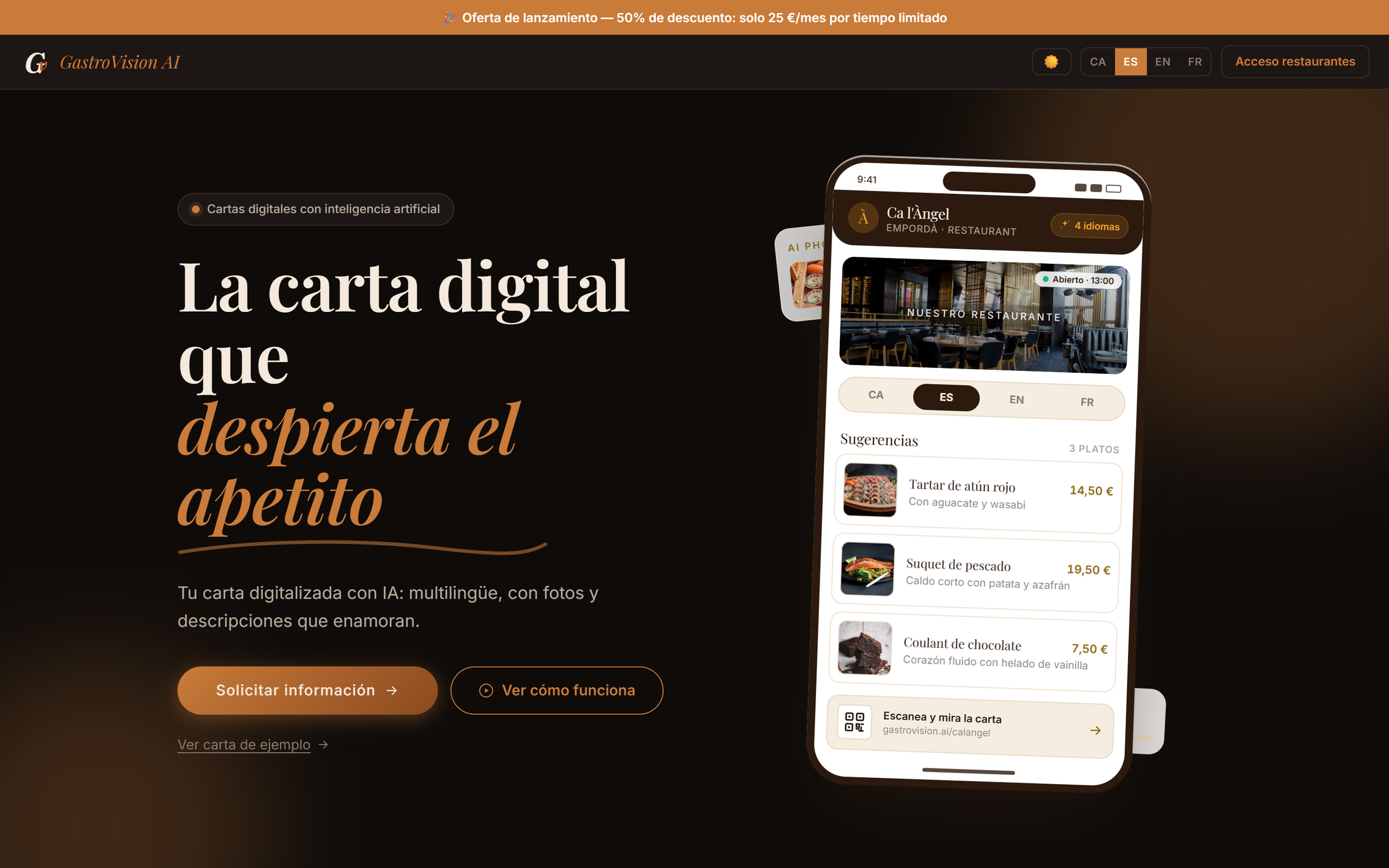
SaaS that turns a photo of a menu into a multilingual digital menu with photos, pairings and a virtual maître d', opened by QR.

Overview
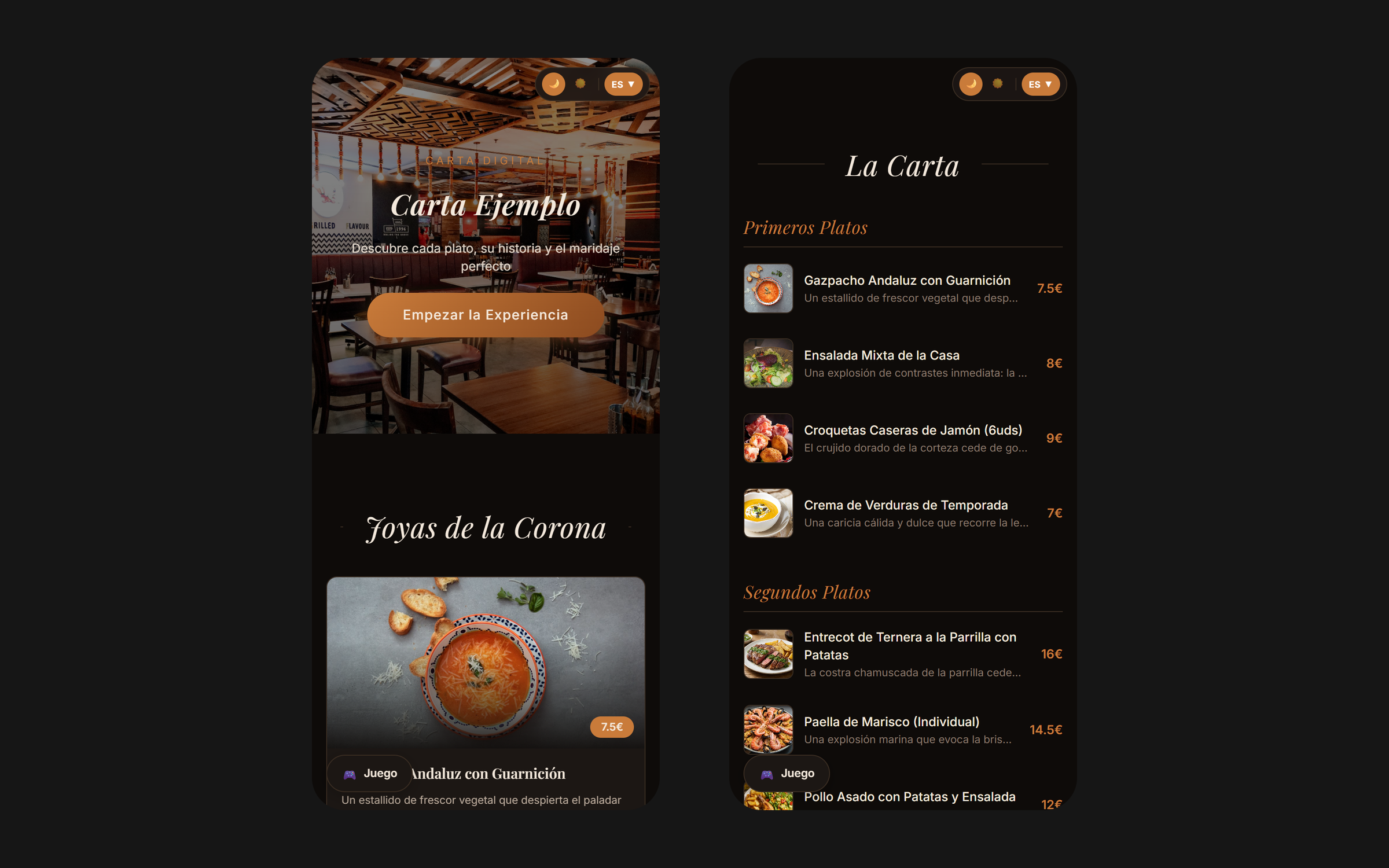
A restaurant uploads a photo or PDF of its menu and the AI transcribes it, enriches every dish with descriptions, pairings and its story, finds photos and translates it into up to ten languages. Diners open it by QR and can ask a virtual maître d'. I designed, built and launched it in nine weeks, with pricing, a landing page and launch materials.
The challenge
In tourist areas, a paper or PDF menu isn't translated, doesn't show the food and doesn't help sell. Going digital usually means retyping the whole menu by hand.
What I did
- Defined the product, the audience—restaurants, bars and hotels in tourist areas—and the price: €25/month as a launch offer.
- Built the full multi-tenant platform: public menu, owner dashboard and admin panel, with 63 commits in nine weeks.
- Designed the AI pipeline: dish extraction, enrichment in the original language and translation with prompt caching to keep costs down.
- Set up self-serve sign-up with a free trial, supervised activation and anti-abuse limits.
- Prepared the launch: a multilingual landing page, seven Instagram carousels, Meta ad scripts and outreach messages by WhatsApp and email.
How it works
From photo to menu in minutes
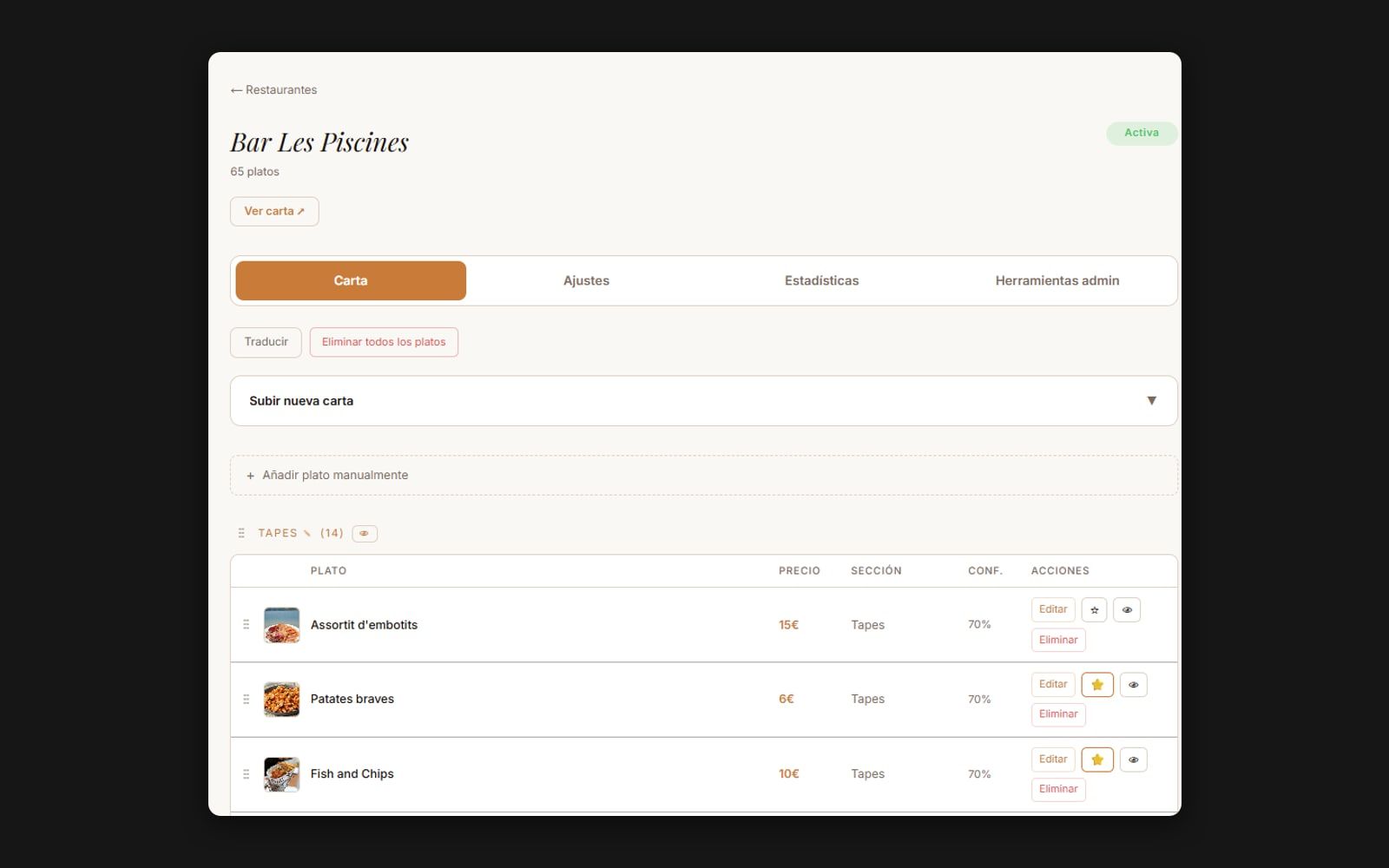
Upload a photo or PDF and the AI detects the language, extracts the dishes, enriches them and translates them. Low-confidence dishes go to a review queue.
Multilingual menu by QR
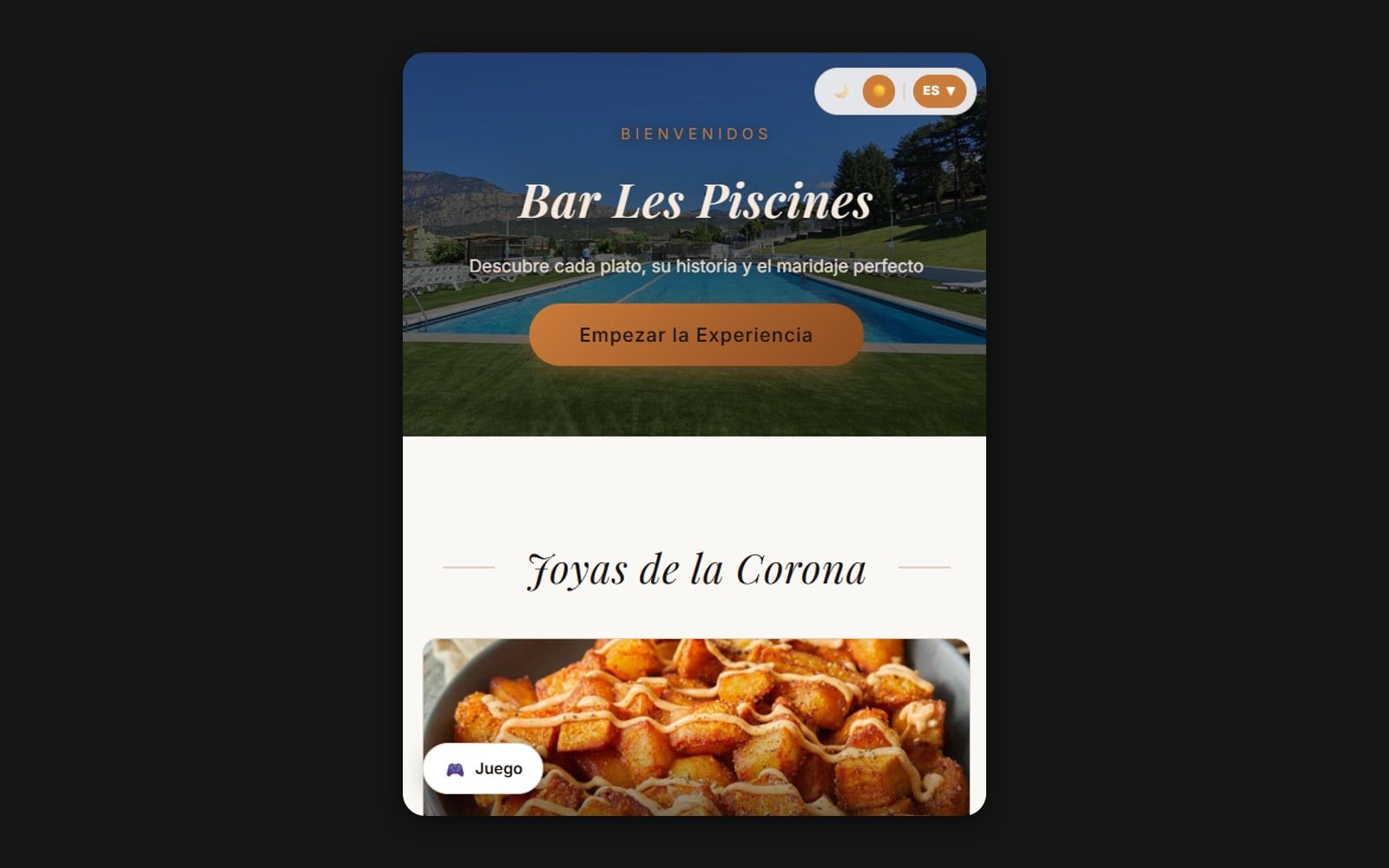
Up to 10 languages, light and dark themes, Ken Burns photos and a featured-dishes section. The printable QR code never changes.
Virtual maître d'
An assistant that recommends dishes and answers questions about allergens and pairings in the diner's language.
Owner dashboard
Four-step onboarding, dish editing, time-slot menus with their own prices, statistics exportable to Excel and a support chatbot.
Admin panel
Every restaurant with search and filters, free-trial management and metrics for AI cost, errors and suggestions.
Multi-tenant security
Each restaurant only sees its own data thanks to Row Level Security, with signed sessions and PBKDF2-hashed passwords.
Key decisions
- Rewrote the prompt so every dish's story is factual and regenerated the ones that looked made up.
- Logging the real cost of every AI call per restaurant, to set usage limits and protect the margin of a low price.
- Re-translations through tool use instead of free-form JSON, to eliminate malformed responses.
- A free trial with supervised activation before automating billing with Stripe, which I specified.
Results
- 63commits in nine weeks
- 10languages per menu
- 3interfaces: diner, owner and admin
- €25/monthlaunch price
Stack and tools
- Next.js 16
- React 19
- TypeScript
- Tailwind CSS v4
- Supabase (PostgreSQL + Row Level Security)
- Anthropic API (Claude Sonnet · Haiku)
- Prompt caching
- Zod
- sharp
- Vercel
- Claude Code
Skills
- End-to-end SaaS product
- Pricing and subscription model
- Multi-tenant architecture
- AI pipelines and cost control
- Copywriting and social content
- B2B sales outreach
What I learned
- A finished product doesn't sell itself: the next step should have been validating with a handful of restaurants before adding features.
- Tracking cost per customer from day one (tokens, limits and caching) is what makes a low price viable.
- Talk about benefits for the restaurant—selling more, serving tourists—rather than the technology.
Gallery